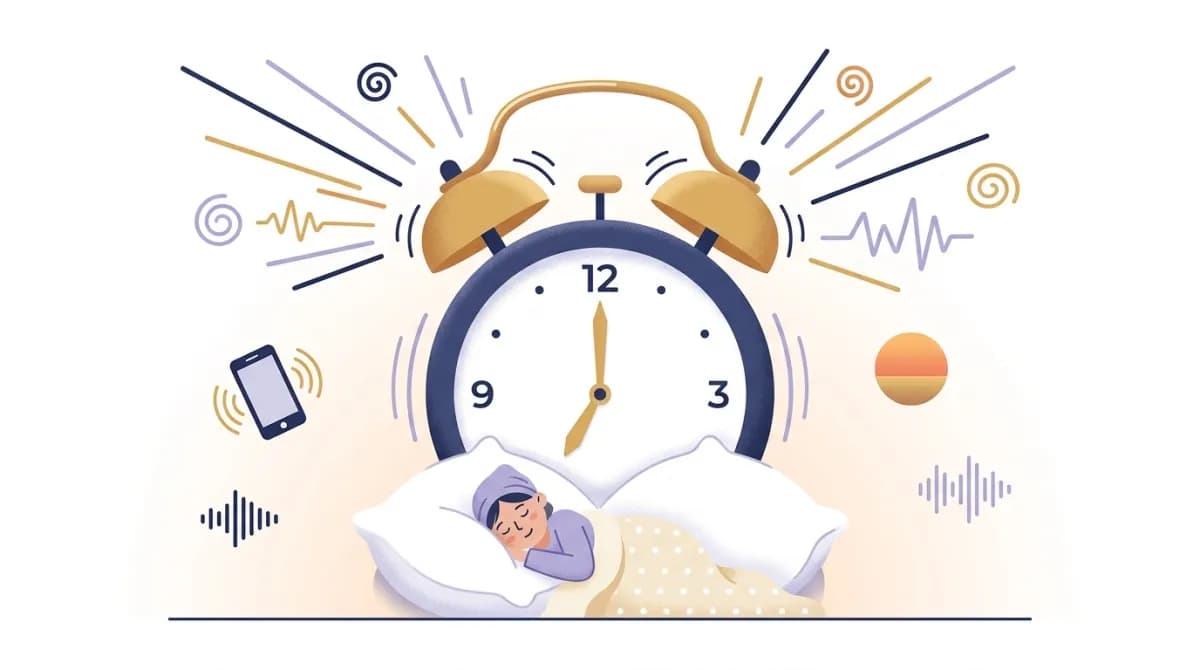
The Best Alarm Clock for Heavy Sleepers in 2026 (Honest Guide)
TL;DR — If you sleep through alarms, you don’t necessarily need a louder one. You need the right type of alarm for your biology. The five that actually work: (1) decibel bombers, (2) bed shakers, (3) mission alarms, (4) sunrise lights, and (5) wake-window smart alarms. Each one wins for a different kind of sleeper. Details below.
Every “best alarm clock” listicle online makes the same mistake: it assumes louder = better. If you’re a genuine heavy sleeper, you already know that isn’t true. You’ve slept through fire alarms. You’ve slept through construction next door. A 105 dB Sonic Bomb isn’t going to change your life just because Amazon says so.
This guide is different. We’re going to walk through the five categories of alarm that actually work for heavy sleepers, give you honest product picks in each category, and — most importantly — help you figure out which type is right for you before you spend a dime.
A quick warning up front: we also make an alarm (WakeMind), and we’ll mention it once, in the category where it’s a genuinely good option. But if another category is a better match for your situation, we’ll tell you that too. Good advice first, product pitch second.
First: why heavy sleepers exist
Before we talk about alarms, it’s worth understanding why you’re a heavy sleeper. Because the right solution depends on the root cause.
Genuine heavy sleepers (vs. people who are just sleep-deprived) tend to share a few traits:
- More time in deep sleep (NREM Stage 3), especially in the first half of the night. People who spend more of their night in deep sleep are harder to wake, full stop.
- Higher arousal threshold — the volume or stimulus needed to pull them out of sleep is genetically elevated. This is a real, measurable trait.
- Dense sleep spindles — these are brief bursts of brain activity during sleep that appear to block outside noise. People with more spindles sleep through more.
- Sleep debt. This is the big one. The more sleep-deprived you are, the deeper and longer your deep sleep becomes, and the harder you are to wake. Most “heavy sleepers” are actually chronically sleep-deprived people with elevated deep-sleep pressure. Why does this matter? Because the first three are biology (you work around them). The fourth is behavior (you fix it). Before you spend $150 on an alarm, ask yourself honestly: am I getting enough sleep? If you’re running on six hours a night, no alarm is going to make waking up feel good. You’d be buying a band-aid for a broken leg.
Related: Why you wake up tired after 8 hours of sleep — the difference between sleep quantity and sleep quality, and why the stage of sleep you wake from matters more than the total.
The 5 types of alarms that work for heavy sleepers
Ranked roughly from “most aggressive” to “most biologically aligned.” The right pick depends on your lifestyle, your sleep cycle, and how much you care about how you feel in the first 20 minutes of the day.
1. Decibel bombers (the loud ones)
What it is: A standalone alarm clock designed to be punishingly loud — typically 90–115 dB, which is closer to a jackhammer than a phone alarm.
Who it works for: People who genuinely don’t hear regular alarms. Shift workers. Heavy-machinery operators. People with hearing loss.
Popular picks:
- Sonic Alert Sonic Bomb Jr. (SBP100) — 113 dB, also comes with a bed shaker attachment. Tank-like build. The classic pick.
- Screaming Meanie 220 — 120 dB, originally designed for truck drivers. Completely unreasonable in the best way. Pros: You will wake up. There is no physiological escape from 113 dB at point-blank range.
Cons: You wake up with a spike of cortisol that stays elevated for the first hour of your day. Partners, neighbors, and pets hate you. The startle response is linked to higher baseline stress over time. And worst of all — you adapt. Within a few weeks, your brain learns to incorporate the noise into your dreams and you sleep through it anyway.
Honest verdict: Useful as a backstop. Bad as a daily driver.
2. Vibrating alarms (bed shakers)
What it is: A puck or pad that slides under your pillow or mattress and vibrates violently at alarm time. Usually paired with a loud audio alarm.
Who it works for: Deaf and hard-of-hearing sleepers. Partners who don’t want to be woken by the audio alarm. Light-sensitive sleepers who don’t want a sunrise lamp. Anyone for whom vibration is the primary wake signal.
Popular picks:
- Sonic Alert SBB500ss Super Shaker — bed shaker that pairs with most Sonic Alert clocks. Near-medical-grade vibration.
- iLuv SmartShaker 3 — Bluetooth shaker that connects to your phone alarm. The quiet-partner favorite.
- Apple Watch haptic alarm — a tap-tap on your wrist. Gentler than a bed shaker, and surprisingly effective if you sleep on your back. Pros: Silent for others in the room. Genuinely hard to sleep through. Doesn’t trigger the cortisol spike of a loud alarm.
Cons: Requires physical contact with the device, so it only works where it’s placed. Bed shakers can be too effective — some people describe the wake as jarring. Not always compatible with all phones.
Honest verdict: The most underrated category on this list. If you’re deaf, hard of hearing, or share a bed with someone who hates audio alarms, this is your answer.
3. Mission / puzzle alarms
What it is: An app that forces you to complete a task — solve a math problem, shake your phone 30 times, take a photo of your bathroom sink, scan a QR code on your coffee machine — to turn off the alarm. No task = no snooze.
Who it works for: The serial snoozer. People whose real problem isn’t hearing the alarm, it’s immediately disabling it from unconsciousness. This is most people who think they’re heavy sleepers.
Popular picks:
- Alarmy (Loud Alarm Clock) — the category leader, 75M+ users. Photo missions, math missions, shake missions, typing missions. It works.
- Kiwake — takes it further: must take three photos of designated spots in your home before the alarm stops. You have to physically get out of bed.
- AlarmMon — lighter touch, plus character-based wake-up animations. Pros: By the time you’ve solved a math problem or walked to your kitchen to take a photo, you’re actually awake. The snooze loop breaks. The behavioral engineering is genuinely clever.
Cons: You’ll resent the app. You’ll start hating mornings even more. The cognitive load of solving puzzles in sleep inertia is unpleasant — which is the point, but also the price. And again: it doesn’t change the root cause. It just makes it harder to avoid.
Honest verdict: Works, but joyless. A good option if your primary problem is snoozing yourself out of your morning, less good if your problem is actually waking up feeling terrible.
4. Sunrise / light alarms
What it is: A bedside lamp that gradually brightens over 20–40 minutes before your alarm time, mimicking sunrise. The light reaches your closed eyelids and signals your circadian system to start waking you up before the audio alarm fires.
Who it works for: Anyone in a dark bedroom, in a dark city, or in winter. People who hate being startled. Everyone who’s ever said “I just want to wake up naturally.”
Popular picks:
- Philips SmartSleep Wake-Up Light (HF3520) — the default pick. Good sunrise ramp, pleasant sound options, reasonable price.
- Hatch Restore 2 — the premium pick. Sunrise + sleep sounds + meditation library (via Hatch+ subscription) + a clean aesthetic. A favorite of the sleep-hygiene crowd.
- Lumie Bodyclock Shine 300 — the UK’s pick. Slightly warmer light, excellent build quality. Pros: Genuinely gentler. Your body actually starts waking up before the audio goes off, so the transition is smoother. The research on light exposure and circadian regulation is strong — this is the one category on this list with serious scientific backing. Works with your biology instead of against it.
Cons: Expensive ($60–$170). Won’t work if you sleep under a blanket or in a sleep mask. Not effective on severe heavy sleepers as a standalone — you’ll need the audio backup. Takes up bedside table space.
Honest verdict: The best daily-driver pick for moderate heavy sleepers who don’t want a punishing wake-up. Skip if you sleep masked or under covers.
5. Wake-window smart alarms (the gentle option)
What it is: Instead of a fixed alarm time, you set a window — for example, “wake me sometime between 6:00 and 6:30.” The alarm uses sleep data (motion, heart rate, or behavioral patterns) to fire when you’re in light sleep, not deep sleep. The wake sequence is gradual rather than startling.
Who it works for: Heavy sleepers whose problem is waking up groggy, not waking up at all. People who want mornings to feel good, not like an ambush. Anyone who’s already fixing their sleep hygiene and wants the final 10% of improvement.
Popular picks:
- Sleep Cycle — the category incumbent. Uses phone motion detection to track sleep stages and fire the alarm in light sleep. 40M+ downloads.
- Pillow (iOS + Apple Watch) — similar concept, tightly integrated with Apple Health.
- WakeMind — our take. Combines a wake-window alarm with a 4-stage wake sequence: gradual sound → personal voice greeting → affirmation → contextual briefing (weather, calendar, first task). We built it because we wanted the wake-up itself to feel like a beginning, not a fire drill. Pros: Dramatically less morning grogginess when you’re waking in light sleep. No cortisol spike. You can tell the difference the first morning.
Cons: Not the right pick if your actual problem is not hearing the alarm at all. These alarms assume you’ll wake — they just try to make it pleasant. If you’ve genuinely slept through 120 dB for 30 minutes, you need something more aggressive as your primary alarm and a wake-window app as a supplement.
Honest verdict: The best pick for the majority of people who think they’re heavy sleepers but are actually just waking up at the wrong moment in their sleep cycle. Less useful for genuine sensory-level heavy sleepers.
Which one is right for you? A decision framework
Answer these in order:
1. Have you ever slept through a smoke alarm, or been told by someone that you slept through a loud noise they couldn’t believe?
-
Yes → You’re a sensory-level heavy sleeper. Start with category 1 (decibel bomber) or category 2 (vibrating alarm), depending on whether a partner or neighbors are a factor. Consider a wake-window app as a supplement once you’re reliably waking.
-
No → Continue. 2. Do you snooze 4+ times every morning?
-
Yes → Your problem is probably snoozing, not waking. Try category 3 (mission alarm) — specifically Alarmy or Kiwake. The friction is the feature.
-
No → Continue. 3. Is your bedroom very dark, or do you wake up in winter months feeling especially terrible?
-
Yes → Category 4 (sunrise light alarm) is probably your answer. Philips HF3520 or Hatch Restore 2.
-
No → Continue. 4. Do you wake up groggy and hate how the first 30 minutes of your day feel?
-
Yes → Category 5 (wake-window smart alarm). Sleep Cycle, Pillow, or WakeMind. This is the largest group of “heavy sleepers” and the category most people should actually start with. Notice that category 5 is at the bottom of the decision tree, not because it’s the worst — it’s actually the best fit for most people — but because a lot of people think they need a loud alarm when what they actually need is a smarter one.
Why “louder” usually fails long-term
Here’s the uncomfortable truth about the loud-alarm strategy: your brain is better than it.
Within 2–4 weeks of consistently using a decibel bomber, most people’s brains start to incorporate the noise into their dreams. They’ll dream of fire trucks, factory whistles, or construction. They sleep through it anyway. We’ve spoken to people who’ve escalated from 85 dB to 115 dB over the course of a year, chasing a wake threshold that keeps moving.
The research backs this up. Habituation to loud auditory stimuli during sleep is well-documented. You can out-engineer it temporarily, but not permanently. What you can’t habituate to, biologically, are:
- Light exposure hitting your circadian photoreceptors
- Vibration applied directly to your body
- Being forced to physically move (mission alarms)
- Waking in light sleep instead of deep sleep Those are durable strategies. A louder buzzer is not.
Quick picks by situation
- I need to wake up and nothing works. Sonic Alert Sonic Bomb Jr. + bed shaker. Used as a backstop, not a daily driver.
- I share a bed with a light sleeper. iLuv SmartShaker 3 or Apple Watch haptic alarm.
- I’m a chronic snoozer. Alarmy with photo missions.
- I live in a dark bedroom / hate winter mornings. Philips SmartSleep Wake-Up Light HF3520.
- I want premium + sleep sounds + meditation. Hatch Restore 2.
- I wake up but feel terrible. Wake-window smart alarm (Sleep Cycle, Pillow, or WakeMind).
- I want the gentlest option that still works. WakeMind — specifically because of the 4-stage wake sequence (gradual sound → voice → affirmation → briefing), which is designed to transition you out of sleep rather than blast you out of it.
Frequently asked questions
Are sunrise alarm clocks worth the money?
For most people in dark bedrooms or northern climates, yes. The research on morning light exposure and circadian regulation is strong, and users consistently report better mood in the first 30 minutes of the day. That said, if you sleep masked or under heavy covers, the light won’t reach your eyes and you’re paying for nothing. Check your bedroom setup first.
Do loud alarms damage your hearing?
Short-term, no. 113 dB for a few seconds isn’t enough exposure to cause damage. Long-term, there’s emerging evidence that chronic morning startle responses (which loud alarms produce) are linked to elevated baseline cortisol and cardiovascular stress markers. So it’s not your ears you should worry about — it’s your stress physiology.
What’s the best alarm clock app for heavy sleepers on iPhone?
Depends on the problem. For serial snoozers: Alarmy. For people who wake up groggy: Sleep Cycle or WakeMind. For people who genuinely can’t hear alarms: you want hardware, not an app.
Is Alarmy actually better than a regular alarm?
For people who snooze compulsively, yes — because the missions force you into wakefulness. For people whose problem is feeling awful in the morning, Alarmy solves the wrong problem. It gets you out of bed; it doesn’t make waking up feel good.
Why does a vibration alarm work better than a loud one for some people?
Touch and loud noise activate your nervous system in different ways. Loud noise triggers a classic startle response (fast heart rate, cortisol, anxiety). Vibration, especially applied to the body, triggers a gentler wake signal — less sympathetic nervous system activation. For the same wake reliability, vibration is easier on your stress response.
Can Apple Watch be used as an alarm for heavy sleepers?
Yes, though with an asterisk. The Apple Watch haptic alarm (wrist tap) is subtle but effective if you sleep on your back with the watch touching your wrist. It’s completely silent and won’t wake a partner. It’s not enough for genuine sensory-level heavy sleepers, but it’s excellent for people whose main concern is waking without disturbing others.
The bottom line
If you’ve been trying to solve “I’m a heavy sleeper” with louder and louder alarms, stop. You’re attacking the wrong variable. The real question is which type of wake-up signal your biology responds to best — and for the majority of people who self-identify as heavy sleepers, the answer is either a sunrise light alarm or a wake-window smart alarm, not a decibel bomber.
And if none of the alarms on this list fix your mornings, consider the unfixed-by-alarms possibility: you’re not sleeping enough. No alarm, no app, no clever engineering is going to substitute for the biology. If you’re chronically under seven hours, nothing on this list will feel good. Fix that first, then pick the category that matches your lifestyle.
We built WakeMind for category 5 — the wake-window smart alarm use case — because it was the category most people needed and the one with the fewest good options. If that’s you, see how the 4-stage wake works. If it’s not you, go buy a Philips sunrise light or a Sonic Alert. No hard feelings.
Related reading
- Why You Wake Up Tired After 8 Hours of Sleep — the sleep inertia explanation
- The Science Behind WakeMind — the research we build on
- What Is Green Noise? The Sleep Sound You Haven’t Tried Yet
- Morning Anxiety: Why It Happens and 7 Ways to Stop It
This guide does not contain affiliate links. Product picks are based on independent research and reputation. Prices and availability accurate as of 2026 — verify before purchasing.
Related Articles
Do Sunrise Alarm Clocks Work? What the Science Actually Says
Sunrise alarm clocks can cut morning grogginess — here's the dawn-simulation science, who they work for (and who still needs sound), and what to look for.
6 min read · Jul 29, 2026
Why Is My iPhone Alarm So Quiet? 7 Fixes That Actually Work
iPhone alarm too quiet? It's usually one of 7 settings — Ringer & Alerts volume, Attention Aware, or Bluetooth routing. Every fix, step by step.
8 min read · Jul 29, 2026
How to Change Your Alarm Sound on iPhone (And Which Tones Actually Wake You Up)
How to change your iPhone alarm sound in 4 steps — plus which stock tones science says wake you up fastest, and how to use any song as an alarm.
6 min read · Jul 29, 2026