Why You Wake Up Tired After 8 Hours of Sleep (And How to Actually Fix It)
TL;DR — If you're sleeping eight hours and still waking up tired, the problem almost certainly isn't how long you slept. It's when your alarm fired. Most alarms wake you in deep sleep, which triggers up to two hours of grogginess (called sleep inertia). The fix: wake in light sleep, keep a consistent wake time, and get morning sunlight. Details below.
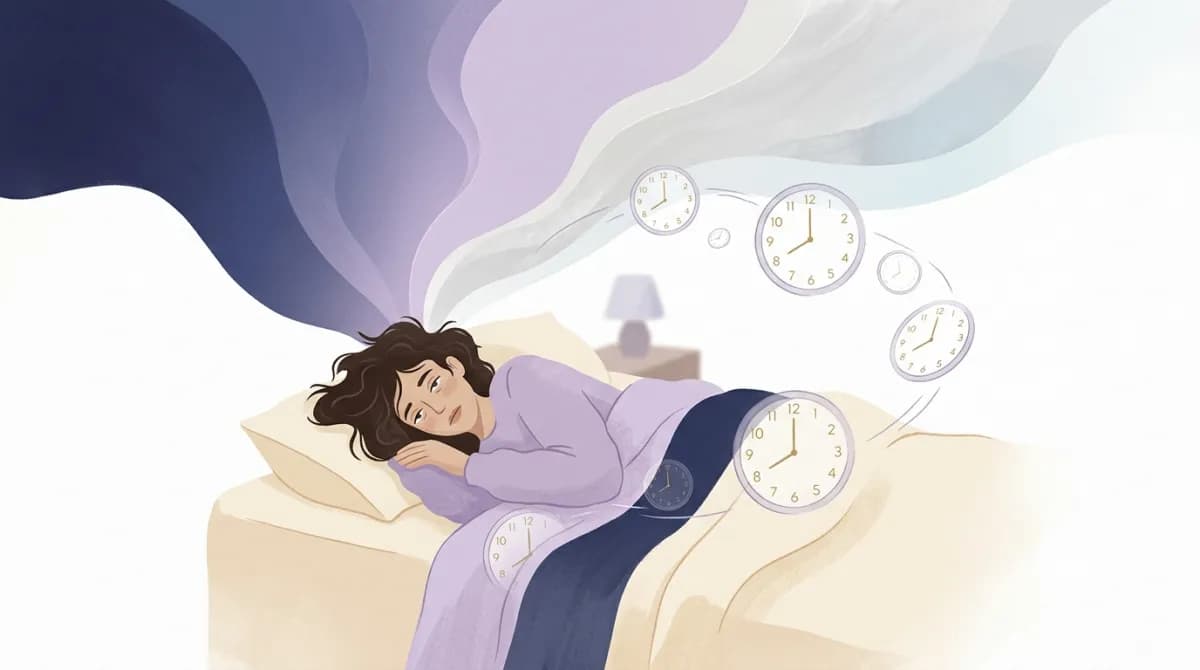
You set the alarm for seven hours and forty-five minutes. You were in bed by eleven. You slept — really slept — straight through the night. And somehow the alarm still goes off like an ambush, leaving you face-down in the pillow wondering what the point of all that sleep even was.
If you've ever asked why am I still tired after 8 hours of sleep, this is for you.
The short answer: you almost certainly woke up in the wrong sleep stage. The longer answer involves your sleep cycles, your alarm, a hormone called cortisol, and seven other variables you probably didn't know mattered. Below, we'll walk through what's actually happening, why "just sleep more" rarely helps, and the specific fixes sleep scientists recommend — including some you can try tonight.
You're not tired because you slept too little. You're tired because of when you woke up.
Sleep researchers have a name for the groggy, foggy, slightly-hungover feeling that lingers after waking: sleep inertia. It typically lasts 15–30 minutes for most adults, but in severe cases it can stretch past two hours. During that window, reaction time, decision-making, and short-term memory are measurably impaired — comparable, in some studies, to being mildly intoxicated.
What determines how bad your sleep inertia is? Mostly one thing: what sleep stage you were in when the alarm fired.
Here's the 90-minute loop your brain runs all night:
- Light sleep (N1 / N2) — Shallow, easily interrupted. You wake from this stage feeling clear-headed.
- Deep sleep (N3) — The heavy, restorative stage. Your body repairs muscle, consolidates memory, releases growth hormone. Getting yanked out of this stage is what ruins your morning.
- REM — Dream sleep. Vivid, emotional, important for mental health. Your body is temporarily paralyzed; your brain is lit up. Your first two cycles of the night are dominated by deep sleep. Your last two shift toward more REM and more light sleep. That's why the clock time of your alarm matters less than where you are in a cycle when it goes off.
An alarm that fires at 6:30 AM because that's what you programmed — with zero regard for whether you're in N1 or N3 — has roughly a 1-in-4 chance of catching you in deep sleep. If it does, you're going to feel it for hours.
⚠️ This is the single most common reason people wake up tired after a "full" night. Not duration. Timing within the cycle.
Want to go deeper? See our full explainer on how sleep cycles actually work.
7 reasons you wake up tired — even after 8 hours
1. Your alarm is hitting you in deep sleep
Already covered, but worth stating directly: standard alarms don't care what your brain is doing. If you use a buzzer-at-6:30 alarm, you're rolling the dice every morning. This is the #1 cause in people who otherwise sleep fine.
2. Your sleep is fragmented — even if you don't remember waking
Micro-arousals are brief wakings (sometimes only 3–10 seconds) that your conscious brain doesn't remember in the morning but your sleep architecture absolutely registers. Common triggers:
- A snoring partner
- Pets on the bed
- Room temperature drift
- Traffic or neighborhood noise
- Undiagnosed sleep apnea (more on this in a moment) You think you slept eight hours. Your brain logged six.
3. Undiagnosed obstructive sleep apnea
The American Academy of Sleep Medicine estimates that roughly 30 million U.S. adults have obstructive sleep apnea — and about 80% are undiagnosed. The giveaways:
- Loud snoring
- Waking up gasping or choking
- Morning headaches
- Dry mouth on waking
- Exhausted no matter how long you sleep If any of this sounds familiar, ask your doctor about a home sleep study. This is the one item on this list you can't DIY — and it's life-changing when it's the cause.
4. Alcohol within three hours of bed
Here's the frustrating part: a nightcap absolutely helps you fall asleep faster. It also suppresses REM sleep in the first half of the night and triggers rebound awakenings in the second half. Your total sleep time might look the same. Your sleep quality is gutted.
Even one drink is enough to measurably reduce next-day alertness.
5. Caffeine later than you think
Caffeine's half-life is about five hours. A 2 PM cappuccino still has a quarter of its caffeine in your bloodstream at midnight. If you're caffeine-sensitive — roughly half of adults carry a gene variant that slows caffeine metabolism — the cutoff needs to be earlier. Try 10 AM.
6. Social jet lag
Staying up two hours later on Friday and Saturday, then "catching up" by sleeping in on Sunday, shifts your circadian rhythm eastward. Monday's 6:30 AM alarm is, biologically, a 4:30 AM alarm. This is why Mondays feel the way they do — and it's not a personality flaw.
7. Your bedroom is fighting you
The Sleep Foundation's optimal bedroom specs:
- Temperature: 60–67°F (15–19°C)
- Light: Total darkness (even small LEDs register)
- Noise: Under 30 dB (roughly a whisper)
- Humidity: 30–50% Miss any one and sleep fragmentation follows.
The 7 fixes sleep scientists recommend
Ranked by impact-to-effort ratio:
Tier 1 — Start tonight
1. Replace your buzzer alarm with a wake-window alarm.
This is the single highest-leverage change most people can make. Instead of a fixed alarm time, you set a wake window — for example, "wake me sometime between 6:00 and 6:30." The alarm then uses sleep data or motion sensing to fire when you're in light sleep, not deep sleep.
The evidence is strong. People who wake in light sleep report dramatically less grogginess and better next-day alertness — even when total sleep time is unchanged.
This is the insight that started WakeMind. Our alarm uses a gradual sequence — a gentle sound, a personal voice greeting, a short affirmation, then a quick briefing of weather and your calendar — so you transition out of sleep instead of being startled out of it. It's designed to work with your biology, not against it.
2. Lock in a consistent wake time.
Even on weekends. Your circadian rhythm doesn't respect Saturday. Keeping your wake time within ±30 minutes every day is the most powerful non-pharmaceutical tool for morning alertness that sleep scientists have found. Harvard Medical School's Division of Sleep Medicine calls this the closest thing to a silver bullet for chronic morning fatigue.
3. Get 10 minutes of morning sunlight.
Within the first 30 minutes of waking, step outside. No sunglasses, no window. Real, direct daylight. This triggers a cortisol pulse that anchors your circadian rhythm for the whole day and dramatically improves how well you'll sleep that night. Stanford neuroscientist Andrew Huberman has popularized this one, but the underlying research goes back decades.
Tier 2 — Give it a week
4. Hard cutoff on caffeine by 12 PM. Earlier if you're sensitive. You won't feel less alert in the afternoon — you'll feel more alert the next morning.
5. At least 3 alcohol-free nights per week. Notice the difference within four to five days. Most people who try this come back shocked.
6. Fix the bedroom. In order of impact: temperature (buy a fan if you need to), darkness (blackout curtains or an eye mask), noise (earplugs or a sound machine). We'll do a full deep-dive on sleep sounds — white, pink, brown, and the increasingly popular green noise — in a separate guide.
Tier 3 — See a professional
7. Rule out sleep apnea. If the symptoms above resonate, don't put this off. A home sleep test is non-invasive, and treatment is often dramatic. Several of the most "hopelessly tired" people we know turned out to have mild apnea and felt like different humans within a month of treatment.
The gentle wake method — why we built WakeMind around it
Almost every alarm ever made is designed to startle you awake. Loud. Sudden. Uncomfortable by design. The logic: "if it's unpleasant enough, you won't sleep through it."
That logic is backwards. Startling yourself out of deep sleep is the cause of morning grogginess. The loud alarm isn't solving the problem — it's creating it.
The gentle wake method, grounded in behavioral-sleep research, works differently:
- A gradual sound ramps up over 1–3 minutes, gently nudging you from light sleep into wakefulness.
- A human-sounding voice greets you personally. Voice cues reduce the cortisol spike associated with harsh alarms — you wake up calmer.
- A short positive anchor (an affirmation or intention) engages your prefrontal cortex before grogginess can fully settle in.
- A contextual briefing — weather, your first meeting, one thing to focus on today — gives your brain a small, manageable task to orient around. You wake up already oriented, already calm, already moving forward. Compare that to the jolt-and-scramble most mornings feel like.
This is the 4-stage wake design at the heart of WakeMind. It's what we wish had existed years ago.
Quick-win protocol — try it tomorrow
Want to feel the difference as fast as possible? Four changes starting tonight:
- Stop caffeine now (or by noon today at the latest).
- Set your wake time 15 minutes earlier than usual, in a wake window if your app supports it.
- Put your phone in a different room — or at least across the room — so snoozing isn't a reflex.
- The moment you wake up, go outside or to the brightest window for 5–10 minutes. Most people notice a real difference by day three. If you don't, the likely culprit is further up the list (fragmented sleep, alcohol, apnea) and it's worth investigating.
Frequently asked questions
Is 8 hours of sleep actually enough?
For most adults, yes. The CDC recommends 7–9 hours for adults 18–60. But what matters more than the number is (a) consistency of wake time, (b) quality and continuity of sleep, and (c) what stage you're in when you wake up. Someone who sleeps 7 consistent hours with a smart wake-up will usually out-perform someone who sleeps 9 fragmented hours and gets blasted awake during deep sleep.
Why do I wake up tired even after 10 hours of sleep?
Almost always a sleep quality issue, not a quantity issue. Common culprits: fragmented sleep, sleep apnea, alcohol, or oversleeping that pushes you deeper into the night's circadian low. Paradoxically, too much time in bed can make you feel worse.
Does the snooze button actually make it worse?
Yes. Snoozing forces your brain to restart a sleep cycle it can't finish, which amplifies sleep inertia. Every snooze is a little gift of grogginess to your future self. Turn it off.
Can I train myself to wake up without an alarm?
With a consistent bed and wake time, most people develop a reliable internal alarm within 2–3 weeks. The challenge is that life — travel, late nights, deadlines — breaks that rhythm almost constantly. A gentle smart alarm is a backstop that respects your biology when life doesn't.
What's the single fastest thing I can change to wake up less tired?
Replace your buzzer alarm with a gradual, wake-window alarm. Everything else on the list compounds over weeks. This one you can feel the first morning.
The bottom line
If you're sleeping eight hours and still waking up tired, the problem almost certainly isn't how long you slept — it's how you woke up.
The fixes, in order of impact:
- Wake up in light sleep, not deep sleep.
- Keep a consistent wake time.
- Get morning sunlight.
- Cut late caffeine and alcohol.
- Tune your bedroom environment.
- Rule out apnea if you snore or wake gasping. We built WakeMind because we wanted the first of those fixes to be effortless — a gentle wake sequence, a personalized morning briefing, and a voice that talks you into the day instead of scaring you out of sleep. If any of this resonates, see how the 4-stage wake works.
Whatever you choose, stop accepting mornings that feel like punishment. Your biology isn't the problem — your alarm probably is.
Related reading
- Why You Keep Waking Up at 3–4 AM (And What It Means)
- Morning Anxiety: Why It Happens and 7 Ways to Stop It
- The 5-Minute Morning Stretch Routine That Actually Works
- What Is Green Noise? The Sleep Sound You Haven't Tried Yet
- The Best Alarm Clock for Heavy Sleepers in 2026
Sources & further reading: American Academy of Sleep Medicine (aasm.org), Sleep Foundation (sleepfoundation.org), CDC Sleep guidelines (cdc.gov/sleep), Huberman Lab (hubermanlab.com), Harvard Medical School Division of Sleep Medicine (healthysleep.med.harvard.edu). Verify specific statistics before publishing.
Related Articles
What Is Core Sleep? Apple Watch Sleep Stages, Explained Honestly
Core sleep is Apple's name for light sleep (N1 + N2) — here's what it does, how much is normal, how accurate the Apple Watch stages are, and what your numbers mean.
6 min read · Jul 29, 2026
Sleep Inertia: Why You Feel Drunk for an Hour After Waking Up
Sleep inertia is why you feel groggy and impaired after waking. The neuroscience, why deep-sleep awakenings are worst, and 8 evidence-based ways to shake it fast.
7 min read · Jul 29, 2026
Do Sunrise Alarm Clocks Work? What the Science Actually Says
Sunrise alarm clocks can cut morning grogginess — here's the dawn-simulation science, who they work for (and who still needs sound), and what to look for.
6 min read · Jul 29, 2026