Why You Keep Waking Up at 3–4 AM (And What It Actually Means)
TL;DR — Waking up at 3–4 AM is one of the most common sleep complaints. It has specific physiological causes (sleep architecture shifting toward light sleep, rising cortisol, blood sugar drops, alcohol rebound) and specific fixes. The spiritual interpretations are popular but not scientifically supported — we'll address them honestly anyway. And if it's happening every night, the most common culprit is usually alcohol, stress, or an early cortisol spike, not mysterious energy.
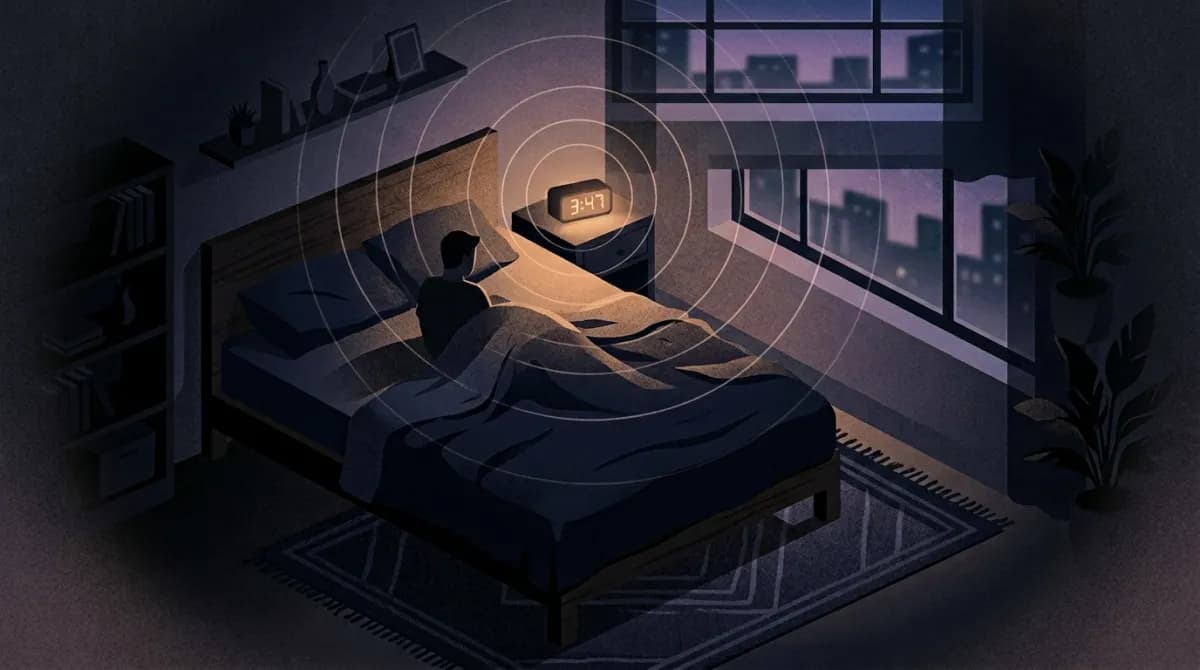
You fall asleep at 11 PM just fine. You sleep soundly for a few hours. Then — wide awake. You check the clock. 3:47 AM. You lie there for 20, 40, 60 minutes trying to fall back asleep. Sometimes you do, sometimes you don't. When you finally do drift off, the alarm goes off 90 minutes later and you feel worse than if you'd just gotten up.
If that happens to you a few times a year, it's probably nothing. If it happens several nights a week, it's a pattern — and patterns have causes. Let's walk through why 3–4 AM is such a specific time, what's actually happening in your body, what the "spiritual meaning" crowd gets right and wrong, and how to fix it.
Why 3–4 AM specifically? The science.
Here's what your body is doing around 3–4 AM that makes this wake-up time so common.
1. Your sleep architecture is shifting from deep to light sleep.
In the first half of the night, your sleep cycles are dominated by deep sleep (NREM Stage 3). In the second half, starting around 3–4 AM, they shift toward REM and light sleep. Light sleep is much easier to wake from — small sounds, temperature changes, a full bladder, or a slight cortisol spike that wouldn't wake you at 1 AM can easily pull you out of sleep at 3 AM.
This isn't a bug, it's a feature: evolution designed you to be more alert in the hours before dawn. The problem is that modern life has no 3 AM predators — just anxiety and a full bladder. See our deeper explainer on how sleep cycles actually work for the full architecture.
2. Your cortisol starts rising.
The Cortisol Awakening Response doesn't just happen when you wake up — it actually starts ramping several hours beforehand. Cortisol begins climbing around 3–4 AM in most people. For most of us, it's not enough to fully wake us. But if you're stressed, anxious, or your cortisol rhythm is dysregulated, that early rise can push you past the wake threshold.
This is why morning-anxiety sufferers often wake up at 3–4 AM feeling already anxious. It's not random. See our morning anxiety article for the full cortisol picture.
3. Your blood sugar dips.
Your liver typically releases glucose overnight to keep your blood sugar stable. If that release is insufficient (common with high-sugar or high-carb diets, or with metabolic dysfunction), your blood sugar dips in the early morning hours. Low blood sugar triggers a cortisol and adrenaline release — your body's way of saying "we need fuel, wake up" — and you find yourself alert at 3:47 AM for no apparent reason.
4. The alcohol rebound effect.
Alcohol is a sedative, but it's a short one. It helps you fall asleep and sleep deeply for 2–3 hours, and then the sedating effect wears off and rebound awakenings kick in. If you had two drinks at 8 PM and fell asleep at 11, the alcohol has fully metabolized by 3 AM — and now your nervous system is in a mild withdrawal state, which includes fragmented sleep and early waking. This is probably the single most common cause of chronic 3–4 AM waking.
5. Sleep apnea micro-arousals.
Obstructive sleep apnea causes hundreds of tiny wake-ups per night that you don't consciously remember. But sometimes one of those arousals happens during light sleep and you wake up fully. Apnea is worse in the second half of the night (REM sleep relaxes throat muscles), which is exactly the 3–4 AM window. If you snore, wake up dry-mouthed, or feel exhausted no matter how long you sleep, this is worth investigating.
8 reasons you might be waking up at 3–4 AM
Ranked roughly from most common to least common.
1. Alcohol the night before
Even a single drink within 3 hours of bedtime is enough to cause rebound awakenings around 3 AM. If you're waking up at 3–4 AM on nights you drink and sleeping through on nights you don't, you've found your answer. Alcohol is the #1 cause of 3–4 AM waking we see.
2. Stress and anxiety
Chronic stress elevates baseline cortisol and disrupts the normal overnight cortisol curve. You get an early cortisol spike (too early — it should start at 5:30 AM, not 3 AM), and you wake up. Often you wake up already thinking about whatever is stressing you, which reinforces the pattern.
3. Blood sugar dysregulation
High-carb or high-sugar dinners cause a blood sugar spike followed by a crash. The crash happens a few hours later — right around 3–4 AM. Your body releases cortisol and adrenaline to mobilize glucose, and you're awake. Fix by eating a moderate dinner with protein and fat, and avoiding sugary desserts.
4. Sleep apnea
More common than most people realize. The giveaways: loud snoring, waking gasping or choking, waking with a dry mouth or headache, feeling exhausted no matter how long you sleep. If any of this sounds familiar, ask your doctor about a home sleep study. Treatment is often life-changing.
5. Caffeine too late in the day
Caffeine's half-life is 5 hours, which means a 2 PM coffee still has 25% of its caffeine in your system at midnight. For caffeine-sensitive people, this is enough to cause fragmented sleep and early waking. Cut caffeine by noon for a week and see if the pattern changes.
6. A full bladder (nocturia)
Drinking a lot of fluid in the 2 hours before bed, alcohol (again), some medications (especially diuretics), and age-related bladder changes can all cause 3–4 AM bathroom wake-ups. If you're waking up because you need to pee, cut fluid intake after 7 PM.
7. A bedroom that's too hot
Your body temperature naturally drops during the night and starts rising around 3 AM. If your bedroom is warm, the rising temperature compounds and can cause early waking. Keep your bedroom 60–67°F (15–19°C) — this is one of the strongest sleep-quality variables you can control.
8. Age-related sleep architecture changes
Sleep architecture changes with age. People over 50 typically have less deep sleep, more light sleep in the second half of the night, and an earlier cortisol rise. Waking at 3–4 AM becomes more common with age. You can improve it, but probably can't fully return to the sleep of a 25-year-old. That's normal.
The "3 AM wake-up spiritual meaning" — the honest take
There's a massive amount of content online claiming 3 AM has spiritual significance. You'll see claims about:
- The "witching hour" — a term from medieval folklore
- Traditional Chinese Medicine — which assigns 3–5 AM to the "lung meridian" and associates it with grief or emotional processing
- Spiritual awakening — the idea that 3 AM wakings are a sign of consciousness expanding or spirit guides communicating
- Biblical references — some interpretations tie 3 AM to the hour of crucifixion Here's our honest take: none of these have scientific backing. That doesn't mean they're meaningless to the people who find them meaningful — the subjective experience of waking up at 3 AM with a strong feeling of needing to process something is real and common. But the reason it's common isn't spiritual; it's that 3 AM is when your brain is in light sleep, your cortisol is rising, and your subconscious is most active (because you're transitioning through REM). Those three things combined mean 3 AM is exactly when your mind is most likely to surface emotional material.
If you find spiritual framing useful for processing what comes up at 3 AM, that's fine. But the physical cause is not mystical — it's sleep architecture plus cortisol plus whatever's on your mind. The fixes in this article are physical because that's where the root cause is.
How to fall back asleep in 5 minutes
If you've already woken up and can't fall back asleep, here's what actually works:
1. Don't check the clock. Looking at the time triggers mental arithmetic ("I only have 2.5 hours left") and amplifies anxiety. Face your phone or clock away from the bed.
2. Don't check your phone. The light suppresses melatonin and the content (email, news) activates your sympathetic nervous system. Even 30 seconds of phone light makes it dramatically harder to fall back asleep.
3. 4-7-8 breathing. Inhale 4 counts, hold 7, exhale 8. Four cycles. This activates the parasympathetic nervous system and is particularly effective in the middle-of-night wake situation.
4. If you're still awake after 20 minutes, get out of bed. Lying in bed frustrated creates a conditioned association between your bed and being awake — which makes insomnia worse over time. Get up, sit in a chair in another room, read a boring book by dim light. When you feel sleepy, go back to bed. This is the foundation of cognitive behavioral therapy for insomnia (CBT-I), the gold-standard non-medication treatment.
5. If you're still awake after 40 minutes, accept it. Some nights are like that. Trying to force yourself back to sleep is usually counterproductive. A single bad night won't ruin your life.
How to fix it long-term
1. Fix alcohol, caffeine, and late meals first. These are the three biggest behavioral variables. Cut alcohol for a week. Move your coffee cutoff to noon. Avoid heavy meals within 3 hours of bed. See if the pattern changes. If it does, you've identified the cause.
2. Cool your bedroom. Target 60–67°F. Use a fan or a smart thermostat. If your partner is a heat generator, invest in separate blankets or a cooling mattress pad.
3. Reduce evening cortisol triggers. No arguments or stressful conversations within 2 hours of bed, no work email after 8 PM, and a wind-down routine that includes some form of cognitive closure — journaling, intention-setting, or a light walk.
4. If you snore, get checked for sleep apnea. This is the most under-diagnosed cause of 3–4 AM waking. A home sleep study is non-invasive and often life-changing if positive.
5. Try CBT-I if it's chronic. Cognitive behavioral therapy for insomnia is the gold-standard, non-medication treatment for chronic sleep-maintenance issues like waking at 3–4 AM and not being able to fall back asleep. The evidence base is as strong as for prescription sleep medications, without the side effects. Available through sleep clinics, apps (Sleepio, Somryst), and some online programs.
6. Use a gentle morning alarm, not a harsh one. This one is indirect but important. If you're waking at 3–4 AM and worrying about how terrible your alarm will feel at 6:30, that anticipatory anxiety keeps you awake. A gentle wake sequence — like the 4-stage wake we built into WakeMind — reduces that anticipatory dread, which makes it easier to fall back asleep.
And for falling asleep in the first place, a steady background sound like green noise can mask the environmental triggers that push you past the light-sleep wake threshold.
When to see a doctor
Most 3–4 AM wake-ups respond to behavioral changes. But see a doctor if:
- The pattern persists for 4+ weeks despite good sleep hygiene
- You wake up gasping, choking, or with chest pain
- You're exhausted every day regardless of total sleep
- You're snoring loudly (or your partner tells you are)
- You have new-onset depression, anxiety, or suicidal thoughts
- You're over 50 and experiencing new night sweats with the wake-ups These could indicate sleep apnea, thyroid issues, early depression, perimenopause/menopause, or other treatable conditions.
Frequently asked questions
Why do I wake up at exactly the same time every night?
Because your circadian rhythm is incredibly precise and your sleep architecture is consistent from night to night. If you routinely enter light sleep around 3:47 AM and your cortisol starts rising at the same time, you'll wake at the same time. The remedy isn't to change the clock; it's to change the variables making you wake (alcohol, stress, temperature, blood sugar).
Is waking up at 3 AM a sign of depression?
Early-morning waking is one of the classic biological signs of major depression — specifically waking 2+ hours before your desired time and being unable to fall back asleep. If it comes with low mood, loss of interest, fatigue, or hopelessness, see a doctor. But waking at 3–4 AM on its own isn't diagnostic. Most people with this pattern don't have depression.
Why do I wake up nauseous in the middle of the night?
A few common causes: (1) blood sugar drops triggering cortisol release, (2) acid reflux (GERD) — especially if you ate late or drank alcohol, (3) early pregnancy, (4) sleep apnea causing oxygen drops, (5) medication side effects, or (6) gastroparesis. If nauseous wake-ups happen frequently, talk to a doctor. Short-term: don't eat within 3 hours of bed, elevate the head of your bed slightly, and avoid alcohol.
Can melatonin help with 3–4 AM waking?
Probably not. Melatonin primarily helps with falling asleep, not staying asleep. Standard melatonin has a short half-life (around 1 hour) and is mostly cleared by 3 AM. Extended-release melatonin might help with maintenance wakings but the evidence is weaker. Better to fix the upstream variables (alcohol, stress, temperature, cortisol).
Does waking up at 4 AM mean I'm spiritually awakening?
We're not going to tell you what your experience means to you — only you can do that. But we will say this: there's a specific physiological reason 3–4 AM is when you're most likely to wake up and feel like you're processing something important. Your brain is in light sleep, your subconscious is highly active, and your emotional circuits are online. That combination naturally surfaces unprocessed material. Call it what you want; the physical cause is the same.
Should I nap if I'm exhausted from waking up at 3 AM?
A short nap (20–30 minutes) in the early afternoon is fine and won't disrupt that night's sleep for most people. Avoid longer naps or naps after 3 PM — they'll push your next bedtime later and potentially restart the cycle.
The bottom line
Waking up at 3–4 AM isn't mysterious and it isn't (usually) spiritual. It's the specific result of your sleep architecture shifting toward light sleep, your cortisol starting to rise, and your body being more sensitive to whatever's happening around you.
The single biggest cause for most people is alcohol. The second is stress and an early cortisol spike. The third is temperature, blood sugar, or a full bladder. In that rough order.
The fixes are the same as the causes:
- Cut or eliminate evening alcohol
- Reduce evening cortisol triggers (no work email, no arguments, wind-down ritual)
- Cool your bedroom to 60–67°F
- Don't eat heavy or sugary within 3 hours of bed
- If you snore, rule out sleep apnea
- Consider CBT-I if it's chronic We built WakeMind around a gentle wake sequence because we believe the way you come out of sleep shapes the entire day — including the anticipatory anxiety at 3 AM that keeps you awake worrying about the alarm. If any of this resonates, see how the 4-stage wake works.
Whatever you do, don't accept 3–4 AM waking as just how sleep is. It's a symptom with specific causes and specific fixes. You can almost certainly get rid of it.
Related reading
- Why You Wake Up Tired After 8 Hours of Sleep — sleep inertia and why the wake-stage matters
- Morning Anxiety: Why It Happens and 7 Ways to Stop It — the cortisol awakening response deep-dive
- The 5-Minute Morning Stretch Routine That Actually Works — a non-anxious morning opening
- What Is Green Noise? — sleep sounds for reducing mid-night wakings
- The Science Behind WakeMind — the research behind our 4-pillar approach
Nothing in this article replaces professional medical advice. If you have chronic insomnia, suspected sleep apnea, or severe mood changes, please see a doctor.
Related Articles
Alarm Clocks for Heavy Sleepers When You Have a Roommate (Or Partner)
Loud alarms wake your roommate too. The alarms that wake heavy sleepers without waking anyone else: bed-shakers, watch haptics, sleep headphones, light, and timing.
6 min read · Jul 29, 2026
iPhone Sleep Mode Explained: What It Actually Does (And How to Turn It Off)
iPhone Sleep Mode is really three features — Sleep Schedule, Sleep Focus, and Wind Down. What each one does, and how to turn Sleep Mode off temporarily or for good.
6 min read · Jul 29, 2026
Sleep Inertia: Why You Feel Drunk for an Hour After Waking Up
Sleep inertia is why you feel groggy and impaired after waking. The neuroscience, why deep-sleep awakenings are worst, and 8 evidence-based ways to shake it fast.
7 min read · Jul 29, 2026