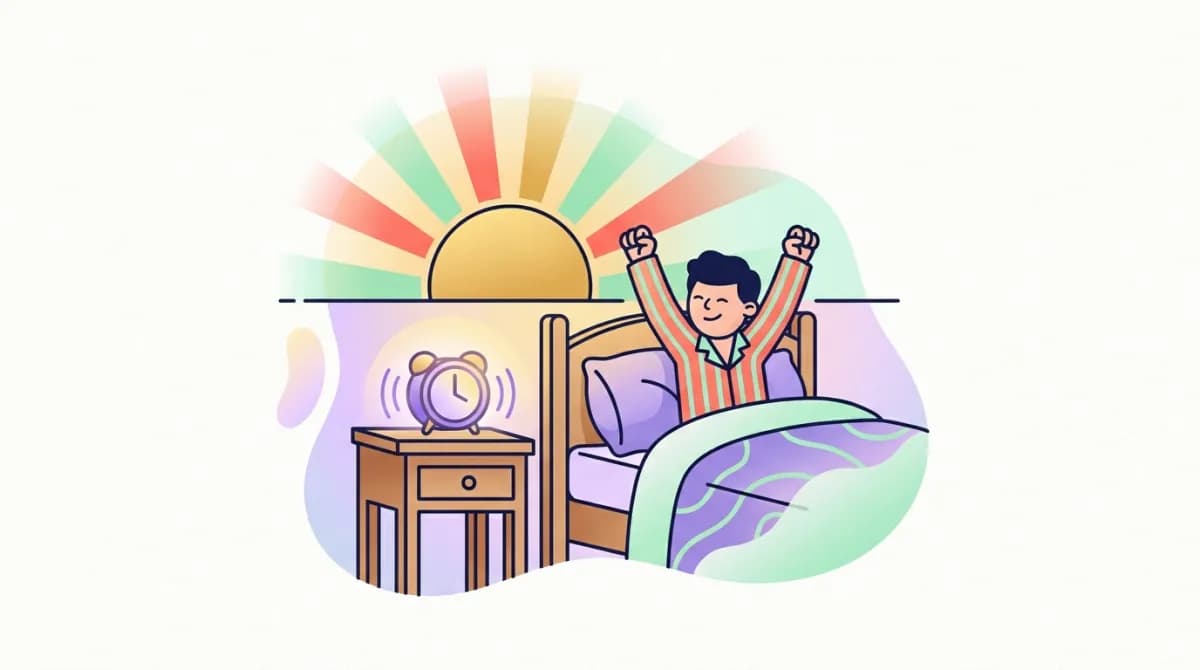
Do Sunrise Alarm Clocks Work? What the Science Actually Says
Sunrise alarm clocks — the bedside lamps that gradually brighten before your wake time — have been around for decades, and the reviews are weirdly polarized: half of buyers call them life-changing, half call them an expensive nightlight.
Both camps are right, and the science explains why. Dawn simulation genuinely works — but it works on a specific part of waking up, and it can't fix everything. Here's the honest breakdown.
The short answer
Yes, sunrise alarm clocks work for most people — specifically at reducing sleep inertia, the groggy, heavy-headed state that can drag on for up to an hour after waking. They're less reliable as a standalone wake-up mechanism for heavy sleepers, and they do nothing for the actual amount or quality of your sleep.
Think of them as a tool that makes waking feel easier, not a tool that guarantees you'll wake.
How dawn simulation is supposed to work
Your body's master clock runs on light. Specialized cells in your retinas detect morning light and signal your brain to:
- Suppress melatonin, the hormone keeping you sleepy.
- Trigger the cortisol awakening response (CAR) — a natural 50–150% rise in cortisol in the first 30–45 minutes after waking that readies your body for action. In nature, this happens gradually as the sun rises. In a modern bedroom with blackout curtains, it doesn't happen at all — your alarm yanks you from darkness to wakefulness with zero hormonal runway. A sunrise clock rebuilds that runway artificially: over 20–40 minutes, light ramps from a dim red glow to bright white, nudging melatonin down and cortisol up before you open your eyes.
What the research found
The studies are small but consistent:
- Research on dawn simulation shows participants waking to gradually brightening light report significantly less sleep inertia and better subjective alertness than those woken by sound alone — with measurable improvements in cognitive performance in the first hour.
- Light exposure timed to the end of sleep helps shift circadian phase earlier, which is why dawn simulation is a standard tool for people with delayed sleep phase ("night owls" who can't fall asleep or wake at conventional times) and why it eases dark winter mornings.
- The effects are strongest for people waking before natural sunrise — shift workers, winter risers, 5 AM gym-goers. If you wake at 9 AM in a bright room, a sunrise clock adds little. The important caveat: the light levels involved are modest. Sunrise clocks typically peak at 100–400 lux — far below the 10,000 lux used in clinical light therapy. That's enough to nudge your hormones, not enough to overhaul them.
Who they work for (and who needs a backup)
Good fit:
-
You wake before sunrise or in a dark room
-
You're a light-to-average sleeper who hates the violence of a beeping alarm
-
Your main problem is morning grogginess, not waking up at all
-
You're a night owl trying to shift earlier Insufficient alone:
-
Genuine heavy sleepers. Light penetrates closed eyelids poorly at these lux levels. If you sleep through loud alarms, a glow on the nightstand won't save you — and yes, this is the most common question we get. The answer: sunrise clocks work for heavy sleepers only as a layer in a stack — light to reduce inertia, plus sound or vibration to guarantee the wake. We break down that stack in our guide to alarm clocks for heavy sleepers.
-
People who sleep facing away from the lamp, or under an eye mask.
-
Anyone whose real problem is waking up exhausted despite enough hours — that's usually sleep timing or quality, not light.
What to look for if you buy one
The market is full of cheap knock-offs that get the details wrong. What matters:
- Peak brightness of at least 200–300 lux at pillow distance. Many budget models top out at ~100 lux — fine as ambience, weak as a wake signal.
- A genuine 20–40 minute ramp that starts red and shifts to white. Red-shifted light early in the ramp is less likely to wake you prematurely; the white finish delivers the melatonin-suppressing punch.
- Backup audio. Non-negotiable for heavy sleepers and wise for everyone: light to ease the transition, sound as insurance.
- A sunset mode (gradual dimming at night) — nice to have, and it supports a consistent sleep cycle schedule by anchoring both ends of your night.
The free(ish) alternative
The cheapest dawn simulation is the sun: sleep with blinds cracked if your room allows it. And if you want the effect without dedicated hardware, this is a problem apps can partially solve — WakeMind pairs smart-alarm timing (waking you in light sleep, when waking is already easiest) with gradually building alarm sounds, attacking the same sleep-inertia problem from the audio side. It won't flood your room with light, but combined with open blinds or a cheap smart bulb on a schedule, you get most of the benefit for a fraction of the price.
Frequently asked questions
Do sunrise alarm clocks actually work?
Yes, for reducing morning grogginess. Studies on dawn simulation show less sleep inertia and better alertness after waking, especially for people rising before natural sunrise. They're weaker as a sole wake-up method for heavy sleepers.
Do sunrise alarm clocks work for heavy sleepers?
Not alone. Light at 100–400 lux penetrates closed eyelids poorly. Heavy sleepers should treat a sunrise clock as one layer — combined with sound or vibration — rather than a standalone alarm.
How bright should a sunrise alarm clock be?
Look for at least 200–300 lux at pillow distance. Clinical light therapy uses 10,000 lux; sunrise clocks deliberately use far less to nudge melatonin and cortisol without jolting you awake early.
How long should the sunrise ramp be?
20–40 minutes. Shorter ramps don't give your hormones time to shift; longer ones risk waking you before your target time, especially if the light starts too bright or too white.
Is a sunrise alarm clock better than a regular alarm?
For how waking feels, usually yes — less startle, less grogginess. For guaranteeing you wake, a regular loud alarm (or both together) is more reliable.
WakeMind wakes you in your lightest sleep stage with gradually building sound — the audio half of the sunrise-clock effect, plus timing no lamp can do. Download on the App Store.
Related Articles
Why Is My iPhone Alarm So Quiet? 7 Fixes That Actually Work
iPhone alarm too quiet? It's usually one of 7 settings — Ringer & Alerts volume, Attention Aware, or Bluetooth routing. Every fix, step by step.
8 min read · Jul 29, 2026
How to Change Your Alarm Sound on iPhone (And Which Tones Actually Wake You Up)
How to change your iPhone alarm sound in 4 steps — plus which stock tones science says wake you up fastest, and how to use any song as an alarm.
6 min read · Jul 29, 2026
Alarm Clocks for Heavy Sleepers When You Have a Roommate (Or Partner)
Loud alarms wake your roommate too. The alarms that wake heavy sleepers without waking anyone else: bed-shakers, watch haptics, sleep headphones, light, and timing.
6 min read · Jul 29, 2026