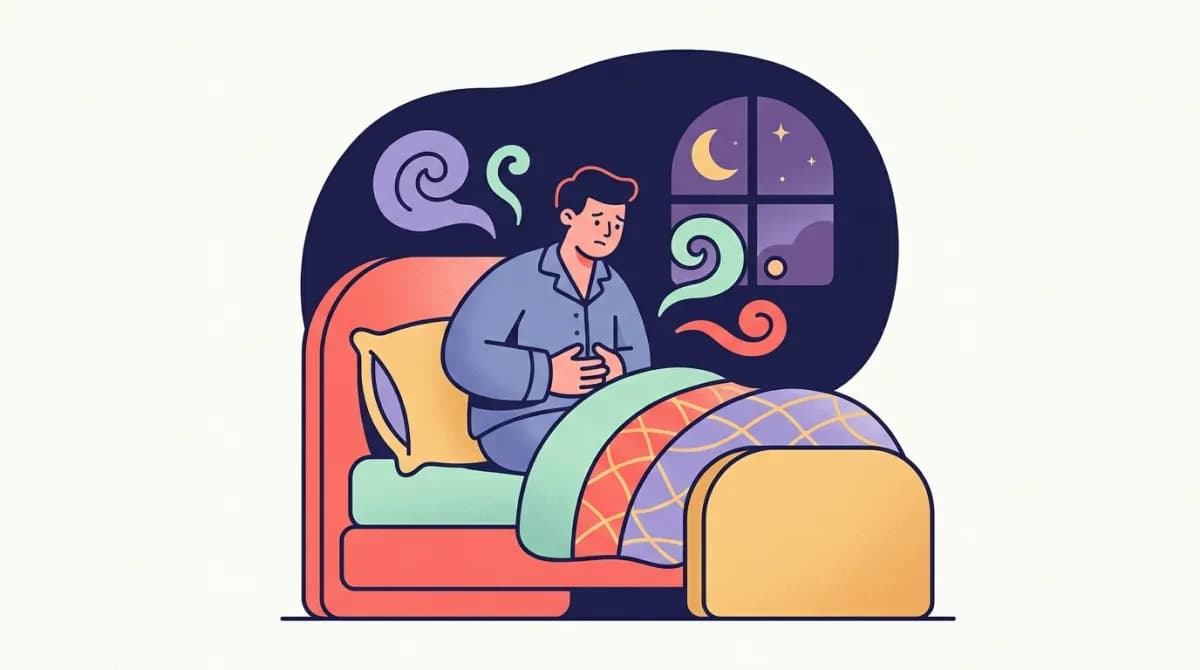
Why Do I Wake Up Nauseous in the Middle of the Night?
Waking at 2 AM with a wave of nausea is a uniquely miserable experience — and a confusing one, because the list of possible causes ranges from "you ate too late" to things that genuinely need a doctor. Most articles either panic you or brush it off.
This one does neither. Here are the causes in rough order of how common they are, how to tell them apart, and when nighttime nausea is a red flag instead of an annoyance.
First: why nausea loves the night
Two physiological facts explain a lot. When you lie flat, gravity stops keeping stomach contents down — anything irritating in your stomach gets easier access to your esophagus. And overnight is the longest stretch your stomach sits empty, so acid builds with nothing to buffer it. Many of the causes below are really "daytime problems the night amplifies."
The common causes
1. Acid reflux (GERD) — the most frequent culprit. Stomach acid creeping into the esophagus causes nausea, a sour taste, sometimes a burning chest or chronic throat-clearing. Lying flat makes it dramatically worse, and symptoms classically hit 1–3 hours after you fall asleep — right after a late dinner has been digested enough to slosh.
Clues: worse after late, large, fatty, or spicy meals; better when you prop yourself up; sour taste in your mouth.
2. Late or heavy eating. A big meal within 2–3 hours of bed means your stomach is still working when you lie down. Digestion slows during sleep, food sits longer, and nausea follows — with or without true reflux.
3. Anxiety and stress. The gut and brain are wired together directly (the vagus nerve is the main cable), and nausea is one of anxiety's most common physical expressions. Nighttime is when distractions end and rumination starts — if you also notice a racing mind, a pounding heart, or dread on waking, this moves up the list. Waking at 3–4 AM with a wired mind and nausea often travel together.
4. Medication side effects. Nausea is on the warning label of a huge share of common medications — antidepressants (especially early in treatment), antibiotics, iron supplements, metformin, NSAIDs, and many others. If the nausea started within days of a new prescription or a dose change, that's your first suspect.
5. Pregnancy. "Morning sickness" is badly named — it strikes at any hour, and nighttime nausea is extremely common in early pregnancy. If there's any chance you could be pregnant, test before going down any other rabbit hole.
6. Low blood sugar. Going to bed after a long gap without eating — or after evening alcohol, which disrupts glucose regulation overnight — can produce nausea, sweating, and shakiness in the early hours. People with diabetes on insulin or certain medications should treat this possibility seriously.
7. Alcohol. Beyond blood sugar: alcohol irritates the stomach lining directly, and as it metabolizes overnight, rebound effects hit in the second half of the night — nausea, sweating, a racing heart, and fractured sleep. The "3 AM nausea after drinks" pattern is textbook.
8. Sleep apnea (the underrated one). Apnea events cause pressure swings in the chest and abdomen that can provoke reflux and nausea, plus the stress response of repeatedly suffocating briefly. Clues: loud snoring, witnessed breathing pauses, waking with a dry mouth or headache, and being exhausted no matter how long you sleep.
Less common but worth knowing
- Gastroparesis (slow stomach emptying — nausea, fullness after small meals; more common with diabetes)
- Peptic ulcers (gnawing upper-abdominal pain that classically wakes people at night)
- Gallbladder problems (nausea with pain in the right upper abdomen, especially after fatty meals)
- Vestibular issues (nausea with dizziness when rolling over — a different mechanism entirely)
What to do tonight
- Don't eat within 3 hours of bed — the single highest-yield change.
- Sleep on your left side. Stomach anatomy means left-side lying keeps acid below the esophageal junction; right-side lying makes reflux worse.
- Elevate the head of your bed 10–15 cm (blocks under the legs, or a wedge pillow — extra regular pillows just bend your neck).
- Keep a bland snack nearby if empty-stomach nausea is your pattern.
- Cut evening alcohol for two weeks and see what happens — the cheapest diagnostic test available.
When to see a doctor
Don't self-manage these:
- Nausea with chest pain, shortness of breath, or pain radiating to the arm/jaw — cardiac symptoms can masquerade as nausea, especially in women. This one is urgent.
- Vomiting blood or material that looks like coffee grounds, or black/tarry stools
- Unintentional weight loss, persistent vomiting, or trouble swallowing
- Severe abdominal pain — particularly right-sided
- Nausea most nights for more than two weeks despite the lifestyle fixes above
- Possible pregnancy, new medication, or diabetes — loop your doctor in early
Frequently asked questions
Why do I wake up nauseous in the middle of the night?
Most commonly acid reflux (worse when lying flat), a late or heavy meal, anxiety, medication side effects, or alcohol. Pregnancy, low blood sugar, and sleep apnea are also frequent causes. Night amplifies all of them because you're horizontal and your stomach has been empty for hours.
Can anxiety cause nausea at night?
Yes — the gut-brain connection is direct and strong, and nighttime removes the distractions that keep anxiety muted during the day. If your nausea comes with a racing mind or heart, anxiety is a prime suspect.
Why do I feel sick at night but fine during the day?
Lying down enables reflux, an empty stomach lets acid accumulate, and digestion slows during sleep. Problems that are mild and unnoticed upright can become symptomatic horizontal.
When is night nausea serious?
When it comes with chest pain, vomiting blood, black stools, severe abdominal pain, unintentional weight loss, or persistent vomiting — or when it happens most nights for weeks despite basic fixes. See a doctor promptly for any of these.
Better nights start with understanding them. WakeMind tracks your sleep and wakes you at the right moment in it. Download on the App Store.
Related Articles
Alarm Clocks for Heavy Sleepers When You Have a Roommate (Or Partner)
Loud alarms wake your roommate too. The alarms that wake heavy sleepers without waking anyone else: bed-shakers, watch haptics, sleep headphones, light, and timing.
6 min read · Jul 29, 2026
iPhone Sleep Mode Explained: What It Actually Does (And How to Turn It Off)
iPhone Sleep Mode is really three features — Sleep Schedule, Sleep Focus, and Wind Down. What each one does, and how to turn Sleep Mode off temporarily or for good.
6 min read · Jul 29, 2026
Sleep Inertia: Why You Feel Drunk for an Hour After Waking Up
Sleep inertia is why you feel groggy and impaired after waking. The neuroscience, why deep-sleep awakenings are worst, and 8 evidence-based ways to shake it fast.
7 min read · Jul 29, 2026