The Navy SEAL Nap: Does the 8-Minute Power Nap Actually Work?
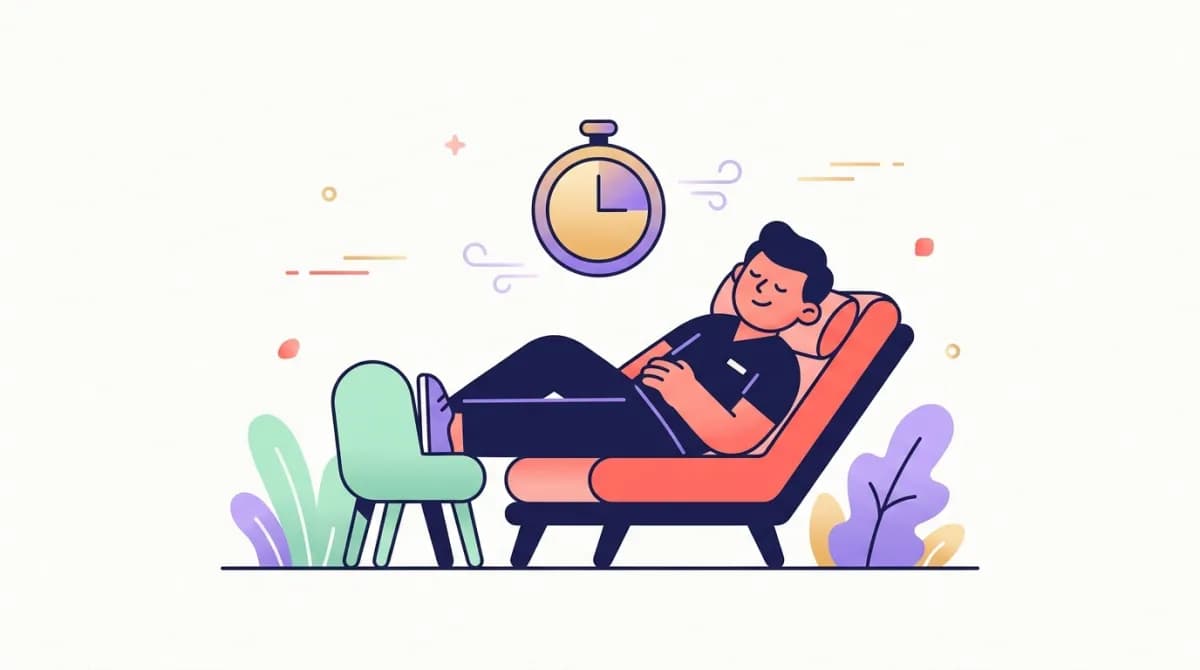
The "Navy SEAL nap" went viral with a simple promise: lie on the floor, put your legs up on a chair or bed, set a timer for 8–12 minutes, and wake up feeling like you slept for hours. Former SEAL Jocko Willink has described exactly this as his go-to midday reset, and millions of people now swear by it.
Does it hold up? Mostly yes — though the reasons it works are more ordinary than the branding suggests. Here's the science under the viral version, and how to do it right.
What the Navy SEAL nap actually is
Strip away the mythology and the protocol has three components:
- A short duration (8–12 minutes). This is the load-bearing element. Brief naps keep you in the lightest sleep stages (N1, maybe brushing N2) — you rest without descending into deep (N3) sleep. Waking from light sleep means minimal sleep inertia, so you surface quickly instead of groggy.
- Legs elevated. Lying supine with calves on a chair, couch, or bed — knees bent ~90°. This takes pressure off the lower back and mildly assists venous return. It feels disproportionately restorative for something so simple, which is why people remember it.
- A hard-ish surface and a firm timer. The floor plus a short timer is a built-in anti-oversleep mechanism: you doze, you don't hibernate. The SEAL context matters for why it exists: operators nap opportunistically in terrible conditions — helicopters, ship decks, 20-minute windows between tasks. The protocol is engineered for speed and reliability under constraints, not for comfort. That constraint-driven design happens to align well with nap science.
What nap research actually supports
The viral version is "8 minutes feels like 8 hours." The research version is more modest but still useful:
- Short naps reliably improve alertness and performance. NASA's famous fatigue research with pilots found that a ~26-minute planned nap improved alertness by roughly 50%+ and performance by about a third. For shorter naps, studies consistently show 10–20 minute naps improve vigilance, reaction time, and mood for 1–3 hours afterward.
- 10 minutes may be the sweet spot. A well-known series of studies by Brooks & Lack comparing nap lengths found 10-minute naps produced immediate improvements across cognitive measures, while 20–30 minute naps showed benefits only after a groggy recovery period — because longer naps dip into deeper sleep.
- The legs-up position has no direct sleep trials, but its mechanics are sound: comfortable spinal decompression plus a position that makes deep sleep less likely (you're not that cozy) — both serve the short-nap goal.
- The "coffee nap" upgrade is real. Horne & Reyner's classic driver-fatigue study found caffeine taken immediately before a short nap outperformed either caffeine or napping alone — caffeine needs ~20 minutes to absorb, so it kicks in as you wake. What naps don't do: replace lost night sleep. A nap restores alertness; it doesn't pay back deep sleep or REM debt. If you need daily naps to function, the nap isn't the solution — your nights are the problem. (This is where to start if that's you.)
How to do the Navy SEAL nap properly
- Time it right: early-to-mid afternoon (roughly 1–3 PM), when the post-lunch circadian dip makes dozing easy. Napping after ~4 PM risks stealing from your night sleep.
- Lie on your back on the floor (a yoga mat is fine), calves up on a chair or couch, knees at ~90°.
- Set an alarm for 10–15 minutes — 8 if you're disciplined, 15 if you need time to drift off. A gentle tone is fine; you're in light sleep, you don't need artillery. (Tone choice matters more than people think.)
- Optional pro move: drink a coffee immediately before lying down. You wake as the caffeine arrives.
- Get up when the alarm goes. The entire value is in not rolling past the timer into deep sleep — that's when you wake up worse than before.
When it won't work
- You're severely sleep deprived. Sleep pressure that strong pushes you into deep sleep fast, and any alarm becomes a negotiation. Fix the nights first.
- You can't nap at all. Some people genuinely don't transition to sleep in short windows. For them, the same protocol works as "NSDR" (non-sleep deep rest) — 10 minutes of stillness with legs up is restorative even fully awake.
- It's 7 PM. Late naps push your bedtime later and start a vicious cycle. If you're crashing every evening, that's a circadian and sleep-debt signal, not a nap deficiency.
Frequently asked questions
What is the Navy SEAL nap?
A short power nap popularized by former SEAL Jocko Willink: lie on your back with your legs elevated on a chair or bed and sleep for 8–12 minutes. The brief duration keeps you in light sleep so you wake without grogginess.
Does the Navy SEAL nap actually work?
The underlying science is solid — 10–20 minute naps reliably improve alertness and performance for hours, with 10 minutes often testing as the optimal length. The legs-elevated position adds comfort and makes oversleeping less likely, though it hasn't been studied directly.
Why elevate your legs when napping?
It decompresses the lower back, aids circulation, and — practically — keeps the nap shallow. Being slightly less cozy is a feature: it helps you stay in light sleep and get up on time.
How long should a power nap be?
10–20 minutes for most people. Long enough to restore alertness, short enough to avoid deep sleep and the heavy sleep inertia that comes with waking from it. Beyond ~30 minutes, grogginess risk climbs sharply.
Is a 20-minute nap better than an hour?
For a midday boost, yes. A 60–90 minute nap includes deep sleep and sometimes REM — more restorative in absolute terms, but you'll surface groggy and it can pressure your night sleep. Short naps are for alertness; full-cycle naps are for recovery days.
WakeMind's smart alarm works for naps too — wake from light sleep every time, never from the depths. Download on the App Store.
Related Articles
Alarm Clocks for Heavy Sleepers When You Have a Roommate (Or Partner)
Loud alarms wake your roommate too. The alarms that wake heavy sleepers without waking anyone else: bed-shakers, watch haptics, sleep headphones, light, and timing.
6 min read · Jul 29, 2026
iPhone Sleep Mode Explained: What It Actually Does (And How to Turn It Off)
iPhone Sleep Mode is really three features — Sleep Schedule, Sleep Focus, and Wind Down. What each one does, and how to turn Sleep Mode off temporarily or for good.
6 min read · Jul 29, 2026
Sleep Inertia: Why You Feel Drunk for an Hour After Waking Up
Sleep inertia is why you feel groggy and impaired after waking. The neuroscience, why deep-sleep awakenings are worst, and 8 evidence-based ways to shake it fast.
7 min read · Jul 29, 2026