How to Wake Up Early When You're Not a Morning Person
Every "wake up at 5 AM" guide on the internet assumes the only thing between you and dawn is discipline. Set the alarm earlier. Want it more. Take a cold shower, bro.
If you've actually tried this, you know what happens: two heroic weeks, then a slow collapse back to your old schedule. The reason isn't weak willpower — it's that these guides fight your circadian biology head-on instead of working with it. Here's what the science says actually moves the needle, and a realistic plan for shifting earlier without hating your life.
First, understand what you're fighting
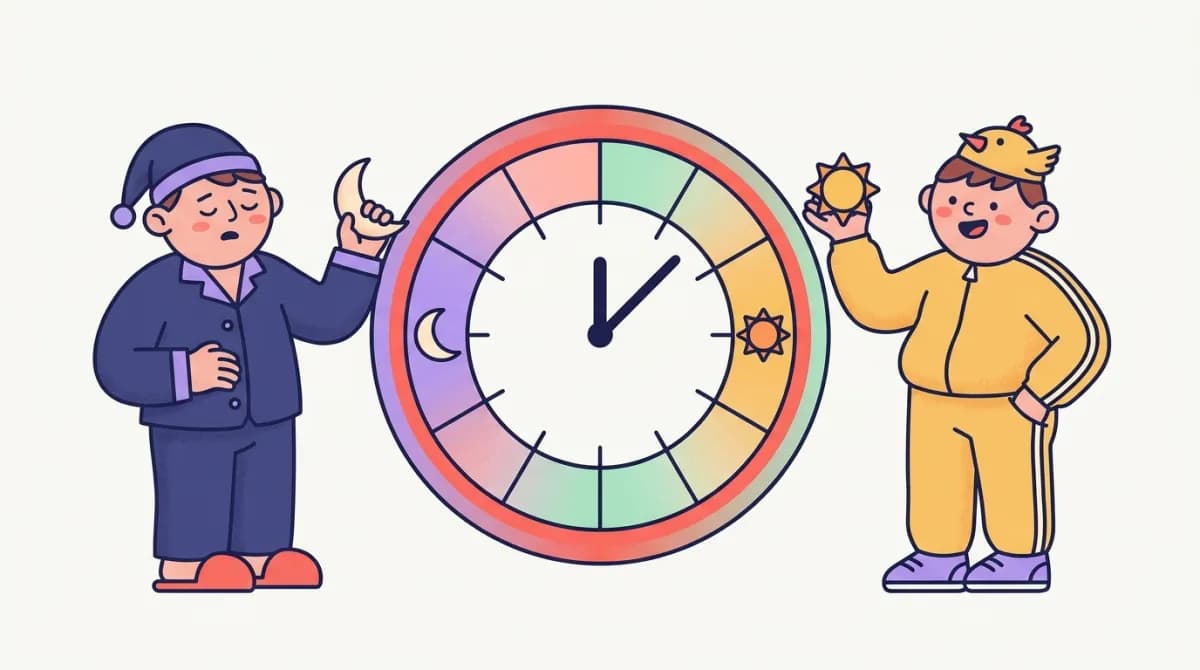
Your chronotype is largely genetic. Whether you're a morning lark or night owl is substantially heritable — variants in clock genes like PER3 correlate strongly with preferred wake time. Chronotype questionnaires (the standard is the MEQ) put most people somewhere in the middle, with genuine extremes at both ends. If you're a true evening type, you will probably never love 5 AM. The realistic goal isn't becoming a lark — it's shifting your window 1–2 hours earlier and making mornings survivable.
"Social jetlag" is the silent killer. Researchers use this term for the mismatch between your biological clock and your social schedule. Sleeping until 10 on weekends after waking at 6:30 all week is the equivalent of flying two time zones west every Friday and back every Monday. Each Monday your body is jet-lagged, which is why Monday mornings feel uniquely awful. Consistency matters more than earliness.
You can't bully a clock, but you can nudge it. Your circadian rhythm shifts through zeitgebers — time cues. The three that matter, in order of power: light, food timing, and activity timing. The whole strategy below is deploying these on purpose.
The 4 levers that actually shift your clock
1. Morning light (the master switch). Light within the first hour after waking is the strongest signal for shifting your clock earlier. It suppresses leftover melatonin and anchors your cortisol awakening response. Get 10–30 minutes of outdoor light — outdoor, because even a cloudy day delivers 10x the lux of a bright room. If you wake before sunrise, a sunrise clock does a decent imitation (the science of those, honestly assessed). This single habit does more than everything else on this list combined.
2. Evening light restriction (the one nobody does). The flip side: bright light — especially overhead and screen light — in the last 1–2 hours before bed pushes your clock later. You don't need to live in a cave: dim the lights, use lamps instead of ceiling lights, and cut the doom-scrolling brightness. Morning light without evening darkness is one step forward, one step back.
3. Caffeine timing. Caffeine has a half-life of 5–6 hours in most adults — longer in slow metabolizers. A 4 PM coffee means a quarter of it is still circulating at midnight, fragmenting sleep and delaying your clock. Cut off caffeine 8–10 hours before your target bedtime. If that sounds impossible, you now know one reason evenings feel wired and mornings feel dead.
4. Meal and exercise timing. Eating late tells your peripheral clocks (liver, gut) that it's still daytime. Finishing dinner 2–3 hours before bed helps. Exercise is a mild zeitgeber too — morning workouts reinforce the earlier shift, while intense late-evening sessions can delay sleep onset in some people.
The realistic 4-week plan
The circadian system shifts roughly 15–30 minutes per day at best. Faster than that and you're just accumulating sleep debt while calling it a routine — which is exactly why cold-turkey 5 AM challenges fail.
Week 1: Anchor the wake time. Pick a target wake time and hold it every day, weekends included — yes, including weekends, that's the whole point. Don't change bedtime yet; let sleep pressure build naturally. Get morning light daily. Expect to feel tired in the evenings earlier; that's the shift working.
Week 2: Move the alarm 30 minutes earlier. Keep the light habit. Start dimming your environment after dinner. If sleep inertia is brutal, check whether your new alarm lands in deep sleep — timing your wake to your sleep cycles matters as much as the hour on the clock.
Week 3: Another 30 minutes, plus evening hygiene. Caffeine cutoff moves earlier. Dinner earlier. If your mind races at your new earlier bedtime, a 10-minute morning meditation practiced at night works just as well for downshifting — the technique is the same.
Week 4: Lock it in. By now the wake time should feel noticeably less violent. Add a morning ritual you actually enjoy — this is underrated. If waking early only ever means suffering, your brain learns to resist it. A 5-minute stretch routine, good coffee, ten quiet minutes — give yourself a reason to be up.
What to do about the alarm itself
Shifting your clock takes weeks; surviving the transition takes the right alarm strategy:
- One alarm, not seven. Snooze trains you to ignore alarms and fragments the last hour of sleep into useless confetti.
- Phone across the room. Standing up is 80% of the battle.
- A tone that works with you. Melodic alarms cause measurably less grogginess than harsh beeping — we ranked the iPhone tones by the science.
- Or let timing do the work. WakeMind wakes you in your lightest sleep stage within a window you set — so even while your clock is mid-shift, you're not being dragged out of deep sleep. For a night owl moving earlier, that's the difference between "hard" and "impossible."
When being a night owl is a medical issue
If you genuinely cannot fall asleep before 2–3 AM no matter what you do, and waking before 9–10 AM is consistently brutal, you may have Delayed Sleep-Wake Phase Disorder — a real, diagnosable condition, not a habit. Sleep specialists treat it with precisely timed light therapy and low-dose melatonin (taken hours before desired sleep, not at bedtime — timing is everything and it's worth professional guidance). Chronic insomnia and waking at 3–4 AM have different causes and different fixes.
The honest bottom line
You probably won't become the person who springs out of bed at 5 AM reciting affirmations. What you can become, in about a month, is someone who wakes at 6:30 without it feeling like an emergency — by shifting gradually, weaponizing morning light, and not torching your progress every weekend. Boring, biological, effective.
Frequently asked questions
Can you actually become a morning person?
Partially. Chronotype is substantially genetic, so true night owls rarely become natural larks — but most people can shift their comfortable wake window 1–2 hours earlier through consistent wake times, morning light, and evening light restriction.
How long does it take to adjust to waking up early?
The circadian clock shifts about 15–30 minutes per day. A 1-hour shift typically takes 2–4 weeks of consistent practice. Faster shifts mostly create sleep debt, not adaptation.
Why do I always fail at waking up early after two weeks?
Usually one of three reasons: you shifted too fast, you keep sleeping in on weekends (social jetlag resets your progress every Monday), or your evening light and caffeine habits are pushing your clock later as fast as your mornings push it earlier.
Does melatonin help you become a morning person?
Used correctly, low-dose melatonin taken 4–6 hours before your current natural sleep time can help shift the clock earlier — but timing is counterintuitive and worth doing with a doctor's guidance, especially for suspected delayed sleep phase disorder.
WakeMind wakes you at the easiest point in your sleep cycle, inside a window you choose — the smart way to make early mornings survivable. Download on the App Store.
Related Articles
Why Is My iPhone Alarm So Quiet? 7 Fixes That Actually Work
iPhone alarm too quiet? It's usually one of 7 settings — Ringer & Alerts volume, Attention Aware, or Bluetooth routing. Every fix, step by step.
8 min read · Jul 29, 2026
iPhone Sleep Mode Explained: What It Actually Does (And How to Turn It Off)
iPhone Sleep Mode is really three features — Sleep Schedule, Sleep Focus, and Wind Down. What each one does, and how to turn Sleep Mode off temporarily or for good.
6 min read · Jul 29, 2026
Sleep Inertia: Why You Feel Drunk for an Hour After Waking Up
Sleep inertia is why you feel groggy and impaired after waking. The neuroscience, why deep-sleep awakenings are worst, and 8 evidence-based ways to shake it fast.
7 min read · Jul 29, 2026